How to use LinkedIn to find your next job, without announcing it to the world.
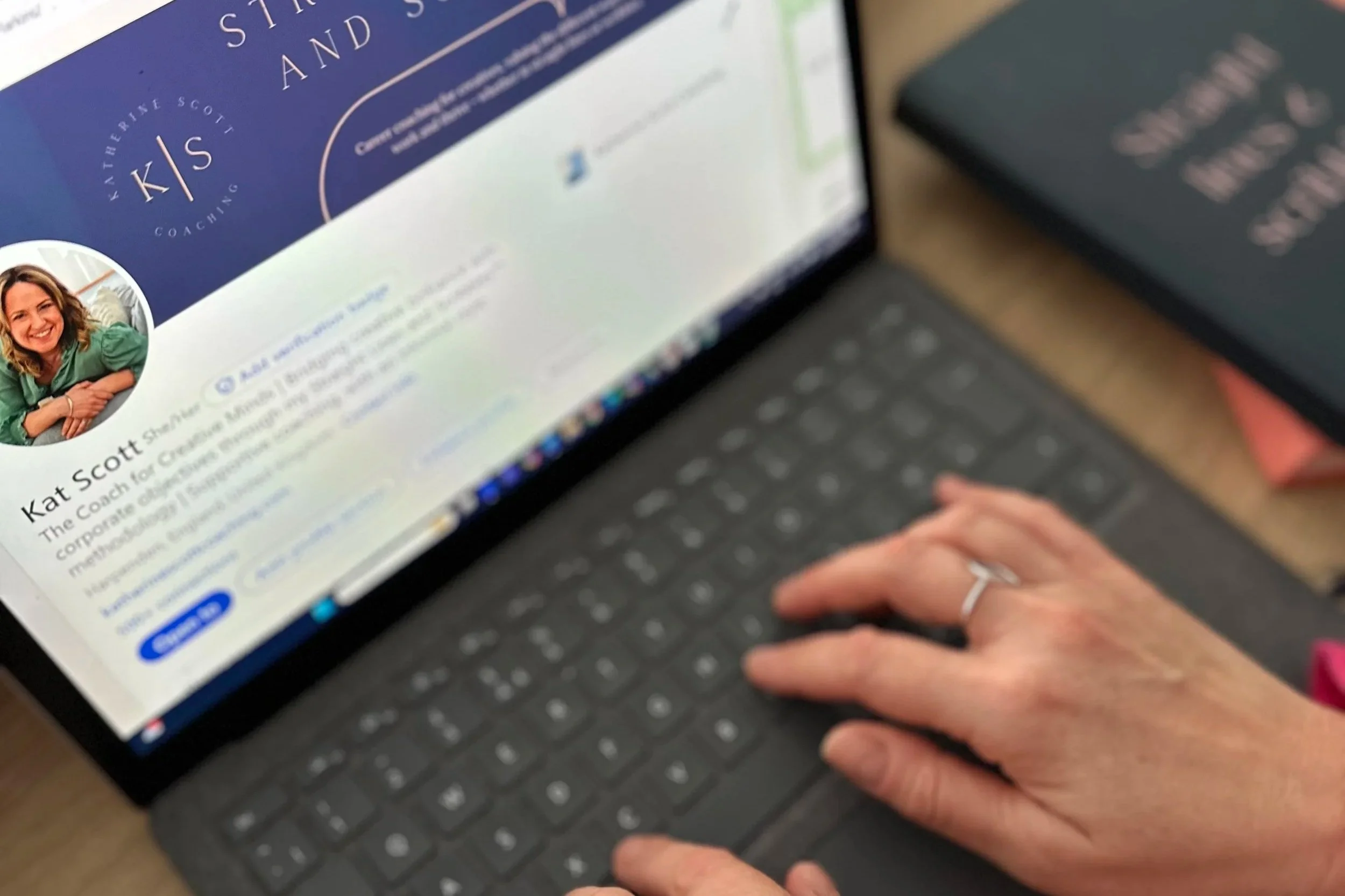
When you’re a professional creative, ready for something bigger and more challenging from your career, LinkedIn can feel like the best place to find your next career opportunity.
Organisations are trawling the algorithms to find their best candidates, everyone else seems to be hanging out there and if you are looking for your next move, it is a good place to be.
But as a professional creative, LinkedIn can also feel very corporate - and very exposing.
In this blog, I’ll share some of the common concerns creative people like you have about LinkedIn, and offer practical advice so you can start using it to open up new avenues for the next phase of your career.
Why LinkedIn is not for you
I’m a career coach for professional creatives. There are lots of ways to prepare for your next career move, but LinkedIn is a brilliant place to begin. However, I find that many creatives feel icky when they think about posting anything there.
Here are some of the exact reasons my clients give for avoiding LinkedIn when they’re thinking about a move:
I can’t post on LinkedIn - what if someone finds out I’m thinking of leaving?
What if someone tells my boss?
What will people think of me if I leave?
What will my team say?
Everyone I’ve ever worked with is on LinkedIn. They’re going to judge me.
Looking at what everyone else is doing has reminded me that I’m not ready for my next move. Everyone else is better than me.
Creatives don’t even hang out on LinkedIn anyway.
With all this going on, it’s no wonder you want to steer clear!
But these fears are often the very things that keep you stuck, even when you know you’ve outgrown your role.
Why LinkedIn is right for you
LinkedIn has changed a lot. It’s no longer just a recruitment tool. It’s a social media platform, it’s a community, it’s a showcase, it’s a playground.
Instead of thinking of it as a place to look for a job, try thinking of it as a place to play safely while you build momentum. I call this “getting LinkedIn busy” with my clients.
You don’t need to make any big announcements, or post “Open to Work” to find your next opportunity on LinkedIn. You can start making progress without drawing unwanted attention by doing things like:
Read your profile and note down anything that feels outdated. Make small changes over time.
Connect with five new people a day to broaden your network gradually without alerting attention.
Search for topics that interest you and start to interact. Add your point of view, ask questions, join discussions. This builds visibility without signalling a job search.
Use LinkedIn to research companies you’d love to work with and learn more about them, their culture, their recruitment processes etc.
Look at profiles of people you admire and notice how they describe their work. Use this as inspiration for your own profile, so you can prepare to stand out in the crowd.
Reframe the way you think about LinkedIn
Changing the way you think about LinkedIn, and starting to engage with it in this quieter way, can ease a lot of the anxiety around it. You’ll begin to understand how it works, learn how to navigate it for your own benefit, and naturally build confidence in how you use it.
I know this, because LinkedIn was a massive issue for me once too.
I had always worked in HR. It was what people knew me for and it was part of my identity. I worked with many brilliant people throughout my HR career, but for a short time I worked with someone who intimidated me and made me miserable at work.
When qualified as a coach, I want to tell people that I’d changed career and that I was ready to take on clients but when I thought about posting on LinkedIn, all I could think of was how she might judge me. What would she think? What would she say?
But then I realised that I was thinking about it all wrong.
Yes, there was a slim chance she would see my post. There was an even slimmer chance she would give it any real thought. On the other hand, I had almost 1,000 other connections who would see it. People I’d worked alongside for years. People who had seen me at my best. People who wanted me to be successful and happier at work.
These people were my champions.
When I reframed my thinking and wrote to them instead, the response was positive and encouraging. And they’re the people I speak to each time I post on LinkedIn now. It makes turning up feel much easier.
Open the gate to your next opportunity
LinkedIn could be the gateway to the next phase of your career so don’t reject it just because it makes you feel uncomfortable.
If you want this to be the year you find greater satisfaction and happiness at work, try some of the small, low-risk actions I’ve suggested above and you will make progress while flying under the radar.
Through coaching, I help ambitious professional creatives uncover new possibilities and build the confidence to step into the next phase of their careers because I know you’re capable of so much more than you think. You can find out how to work with me here.
I also write a newsletter called Untangle, where I share practical career advice, coaching tools, and insights to help creative minds navigate their careers with confidence. You can sign up here.
LinkedIn can feel daunting when you don’t know what to expect from it but we’ve explored some of the common worries about showing up on LinkedIn and I’ve shared practical steps and mindset shifts that will help you prepare for your next career move, without posting “Open to Work”. What can you try today?
